NIS2 Board Liability: Personal Fines, Bans, and What Management Must Know in 2026

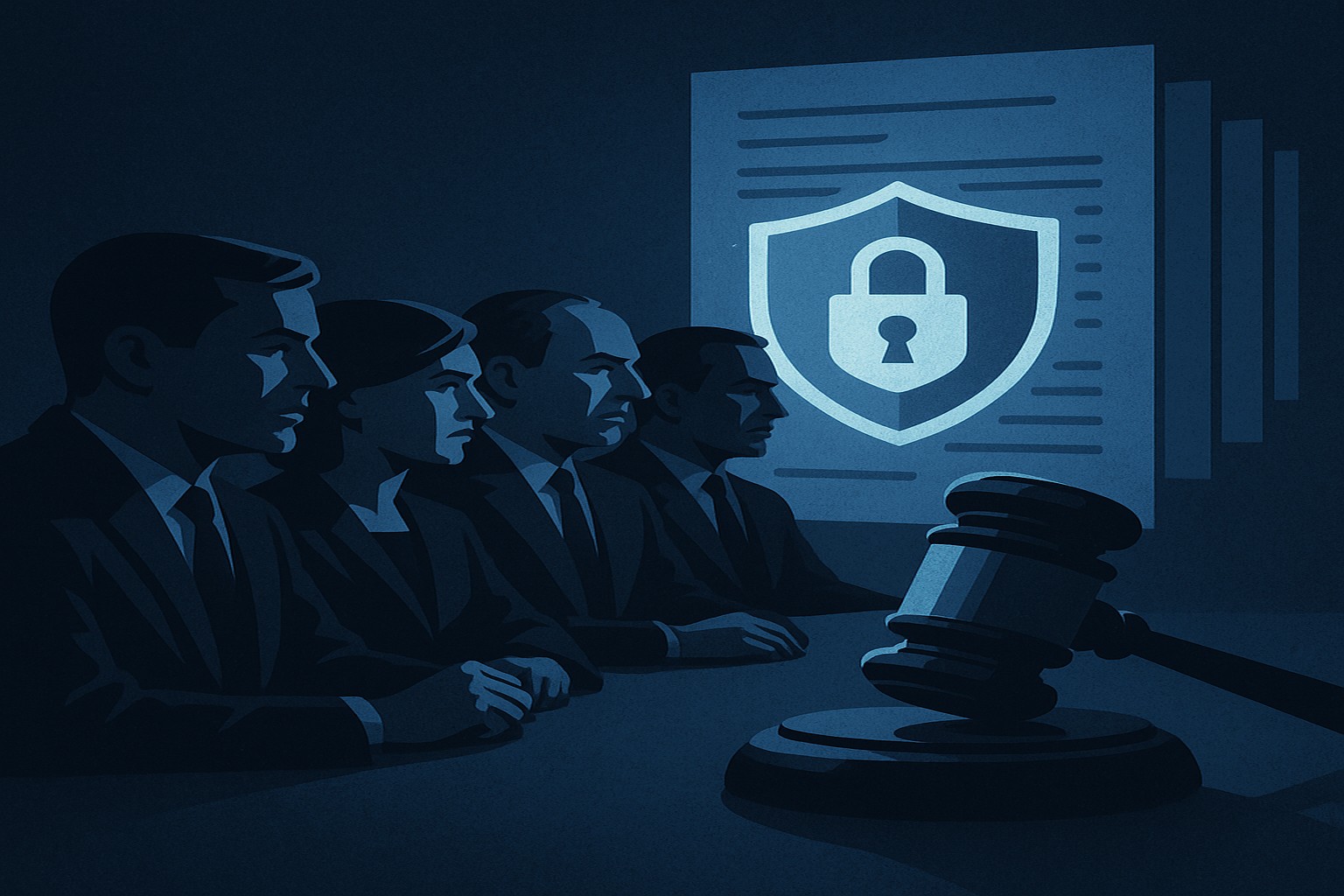
NIS2 Article 20 holds management bodies personally liable for cybersecurity failures. This guide explains personal fines, temporary bans, and the 7 steps boards must take to protect themselves in 2026.
NIS2 does something that previous EU cybersecurity directives never did: it makes management personally liable. Not the company. Not the IT department. The individuals who sit on the board and approve budgets, set priorities, and sign off on strategy. Article 20 of the NIS2 Directive states, in unambiguous terms, that management bodies must approve cybersecurity measures, oversee their implementation, and can be held personally liable for failures. This is not a theoretical risk. Several EU Member States have already drafted national transposition laws that include personal fines and temporary bans from management positions.
For boards of directors and C-suite executives at essential and important entities, this changes the calculus entirely. Cybersecurity is no longer a technical problem delegated to the CISO. It is a governance obligation with personal legal exposure. Here is what management must understand, what the penalties look like, and the seven steps every board should take before enforcement intensifies.
What Article 20 Actually Says
Article 20 of the NIS2 Directive (EU) 2022/2555 contains three paragraphs that directly address management accountability:
Article 20(1): Management bodies of essential and important entities must approve the cybersecurity risk-management measures taken by the entity, oversee their implementation, and follow cybersecurity training.
Article 20(2): Member States must ensure that management bodies can be held liable for infringements of the cybersecurity risk-management obligations.
Article 20(3): Member States may adopt provisions holding natural persons accountable, including the possibility of temporary bans from management functions.
The key phrase is “held liable for infringements.” This is not about regulatory slaps on the wrist. Member States are required to implement enforcement mechanisms that target individuals, not just corporate entities. The directive explicitly mentions personal fines and temporary bans as possible sanctions.
The Penalties: Personal Fines and Bans
The NIS2 penalty framework distinguishes between essential and important entities, but personal liability applies to both categories.
Essential Entities
- Administrative fines: Up to €10 million or 2% of global annual turnover, whichever is higher
- Personal liability: Management bodies can be held personally liable for non-compliance
- Temporary bans: Member States may impose temporary bans on individuals from holding management positions at essential entities
- Scope: Energy, transport, banking, financial market infrastructure, healthcare, drinking water, digital infrastructure, ICT service management, public administration, space
Important Entities
- Administrative fines: Up to €7 million or 1.4% of global annual turnover, whichever is higher
- Personal liability: Same personal liability framework applies
- Scope: Postal services, waste management, chemicals, food, medical devices, manufacturing, digital providers, and smaller entities in essential sectors
What “Personal Liability” Means in Practice
Personal liability under NIS2 means that individual board members and senior executives can face:
- Personal financial penalties — fines levied against the individual, not the company
- Temporary management bans — being prohibited from serving on boards or in executive roles for a defined period
- Obligation to remediate — court-ordered compliance improvements with personal accountability
- Reputational damage — public enforcement actions that name individuals
The exact mechanisms vary by Member State, but the directive requires all 27 EU countries to implement personal liability provisions. Germany, France, and the Netherlands have already published draft transposition texts that include these measures.
7 Steps Every Board Must Take
Step 1: Approve a Formal Cybersecurity Risk Management Framework
The board must formally approve the entity’s cybersecurity risk management measures. This is not a rubber stamp. The approval must be documented in board minutes, and the measures must address all areas specified in Article 21(2): risk analysis, incident handling, business continuity, supply chain security, security policies, cryptographic controls, and training.
Action: Schedule a dedicated board session to review and approve the cybersecurity framework. Document the approval in formal minutes with specific references to NIS2 requirements.
Step 2: Establish Regular Cybersecurity Reporting
Article 20 requires management bodies to “oversee the implementation” of cybersecurity measures. This means boards must receive regular, structured reports on cybersecurity posture — not just during incident response.
Action: Implement quarterly cybersecurity reporting to the board, including key risk indicators, incident trends, vulnerability management status, and compliance progress against NIS2 requirements.
Step 3: Complete Mandatory Cybersecurity Training
Article 20(1) explicitly states that management bodies must “follow cybersecurity training.” This is not optional. Board members and senior executives must undergo regular cybersecurity training to understand the threats and obligations they are personally accountable for.
Action: Enroll all board members and C-suite executives in annual cybersecurity awareness training. Document completion and retain records for audit purposes.
Step 4: Appoint a Named Cybersecurity Officer with Board Access
NIS2 requires that cybersecurity responsibilities are clearly assigned and that there is a direct reporting line to the management body. The named officer must have sufficient authority and access to the board.
Action: Designate or confirm a named cybersecurity officer (CISO, DPO, or equivalent) with a documented reporting line to the board. Ensure this officer presents at every board meeting.
Step 5: Review and Approve Incident Response Procedures
The board must be confident that the entity can meet NIS2’s strict incident reporting deadlines: early warning within 24 hours, incident notification within 72 hours, and a final report within one month. These timelines require pre-approved procedures and tested processes.
Action: Review and formally approve the incident response plan, including the 24-hour early warning procedure. Ensure the plan has been tested through tabletop exercises within the past 24 months.
Step 6: Assess Supply Chain Cybersecurity Risks
Article 21(2)(d) requires entities to address supply chain security. The board must ensure that third-party risk assessments are being conducted and that critical suppliers meet security requirements.
Action: Request a report on the entity’s ICT third-party register and the results of security assessments for critical suppliers. Approve supply chain security policies.
Step 7: Document Everything
The single most important action for boards facing personal liability is documentation. If a supervisory authority investigates a cyber incident at your entity, they will request evidence that the board fulfilled its obligations. Board minutes, training records, approval documents, and reporting evidence are the board’s defense.
Action: Conduct an immediate audit of documentation. Ensure every NIS2 obligation has corresponding evidence: board minutes approving measures, training completion records, quarterly reports received and reviewed, incident response test results, and supply chain assessment reports.
How Cyber Insurance Protects Management
Cyber insurance plays a critical role in the NIS2 liability landscape. While insurance cannot protect against regulatory fines in all jurisdictions, it can provide:
- Legal defense costs — covering the cost of legal representation during regulatory investigations
- Crisis management support — access to incident response teams, forensic investigators, and legal counsel
- Business interruption coverage — financial protection during service disruption caused by cyber incidents
- Board liability insurance (D&O) — personal financial protection for directors and officers facing liability claims
However, cyber insurers are increasingly scrutinizing NIS2 compliance status. A board that cannot demonstrate compliance may face coverage gaps or denial of claims. Use our Cyber Risk Calculator to assess your exposure and our NIS2 Compliance Checker to evaluate your current posture.
Germany, France, and the Netherlands: Early Transposition Signals
Member States were required to transpose NIS2 into national law by October 17, 2024. While many missed this deadline, several have made significant progress:
Germany (BSI Enforcement)
Germany’s BSIG (BSI Act) amendments implement NIS2 through the existing BSI regulatory framework. The BSI has announced enhanced supervisory powers, including unannounced audits and personal liability provisions for management at critical and particularly critical entities. The German approach classifies entities as “critical,” “particularly critical,” or “important” with escalating obligations.
France (ANSSI Supervision)
France has designated ANSSI as the competent supervisory authority. The French transposition includes personal liability provisions and has expanded the scope of entities covered under the existing LPM (Loi de Programmation Militaire) framework. ANSSI has published guidance indicating that enforcement will begin with essential entities in critical infrastructure sectors. See our NIS2 France ANSSI Compliance Guide for the complete French enforcement timeline and requirements.
Netherlands (CSAN Implementation)
The Netherlands has implemented NIS2 through the Cyber Security Act (CSAN), which includes personal liability for management bodies at essential and important entities. The Dutch approach includes a graduated enforcement model with escalating penalties.
Italy (ACN Supervision)
Italy’s Decreto Legislativo 138/2024 adopts the maximum personal liability provisions allowed under NIS2. Article 23 makes management bodies personally liable for cybersecurity failures, with individual administrative sanctions for directors who cannot demonstrate due diligence. ACN has surprise audit authority and can temporarily suspend management functions. Italy also doubled the penalty provisions for repeat offenders within five years. See our NIS2 Italy ACN Compliance Guide for the complete Italian enforcement framework.
The Clock Is Ticking
For management bodies at essential and important entities, the time for delegation is over. NIS2 personal liability means that cybersecurity governance failures can result in personal financial penalties and career-ending management bans. The seven steps outlined above are the minimum that every board should implement immediately.
Download our free NIS2 compliance checklist to assess your entity’s readiness. For a comprehensive evaluation, try our NIS2 Compliance Checker — it takes 5 minutes and identifies exactly where your gaps are.
If you are a broker or underwriter assessing NIS2 compliance for clients, read our NIS2 underwriting questions guide for the specific questions that reveal compliance gaps during placement.
For sector-specific guidance on the highest-risk NIS2 entities, see our Critical Infrastructure Underwriting Guide — covering healthcare, energy, and transport with underwriting-specific risk factors.
Michael Guiao Michael Guiao founded Resiliently AI and writes Resiliently. He has CISM, CCSP, CISA, and DPO certifications — but let them lapse, because in the age of AI, knowledge is cheap. What matters is judgment, and that comes from eight years of hands-on work at Zurich, Sompo, AXA, and PwC.
Get the full picture with premium access
In-depth reports, assessment tools, and weekly risk intelligence for cyber professionals.
Best Value
Professional
€490 /month
Full platform — continuous monitoring, API access, white-label reports
Everything in Starter plus professional tools
Upgrade Now → 30-day money-back
Secure via Stripe
Cancel anytime
Free NIS2 Compliance Checklist
Get the free 15-point PDF checklist + NIS2 compliance tips in your inbox.
Check your inbox! Your checklist download is on its way.
Something went wrong. Please try again.
No spam. Unsubscribe anytime. Privacy Policy
blog.featured
AI Tooling RCE: The Sublimit Layer Underwriters Rarely Underwrite
Cyber Insurance ·
9 min read
SolarWinds SAML Bypass: The IT Ticketing Supply-Chain Path
Cyber Insurance ·
9 min read
AM Best and S&P Flag Cyber Pricing Risks: What Underwriters Should Do at Renewal
Cyber Insurance ·
7 min read
One Salesforce Integration Breach Just Hit 200 Cyber Insureds
Cyber Insurance ·
8 min read
Premium Report
2026 Cyber Risk Landscape Report
24 pages of threat analysis, claims data, and underwriting implications for European cyber insurance.
View Reports →Related posts
Agentic AI · · 11 min read
The Five Toxic Powers of Agentic AI — What Underwriters Need to Know
Agentic AI introduces five double-edged powers that create toxic risk combinations. Here's how underwriters, brokers, and CISOs should assess the threat.

Agentic AI · · 9 min read
Agentic Security: What Underwriters Need to Know in 2026
Autonomous AI agents are entering production at scale — and they bring a completely new attack surface that traditional cyber insurance questionnaires weren't designed to capture.

AI Agents · · 7 min read
An AI Agent Deleted a Startup's Production Database — Can You Insure Against That?
PocketOS lost its production database to a Cursor AI agent in 9 seconds. The incident exposes a gap in cyber insurance that most policies don't cover: AI-caused operational destruction with no external attacker.