One Salesforce Integration Breach Just Hit 200 Cyber Insureds

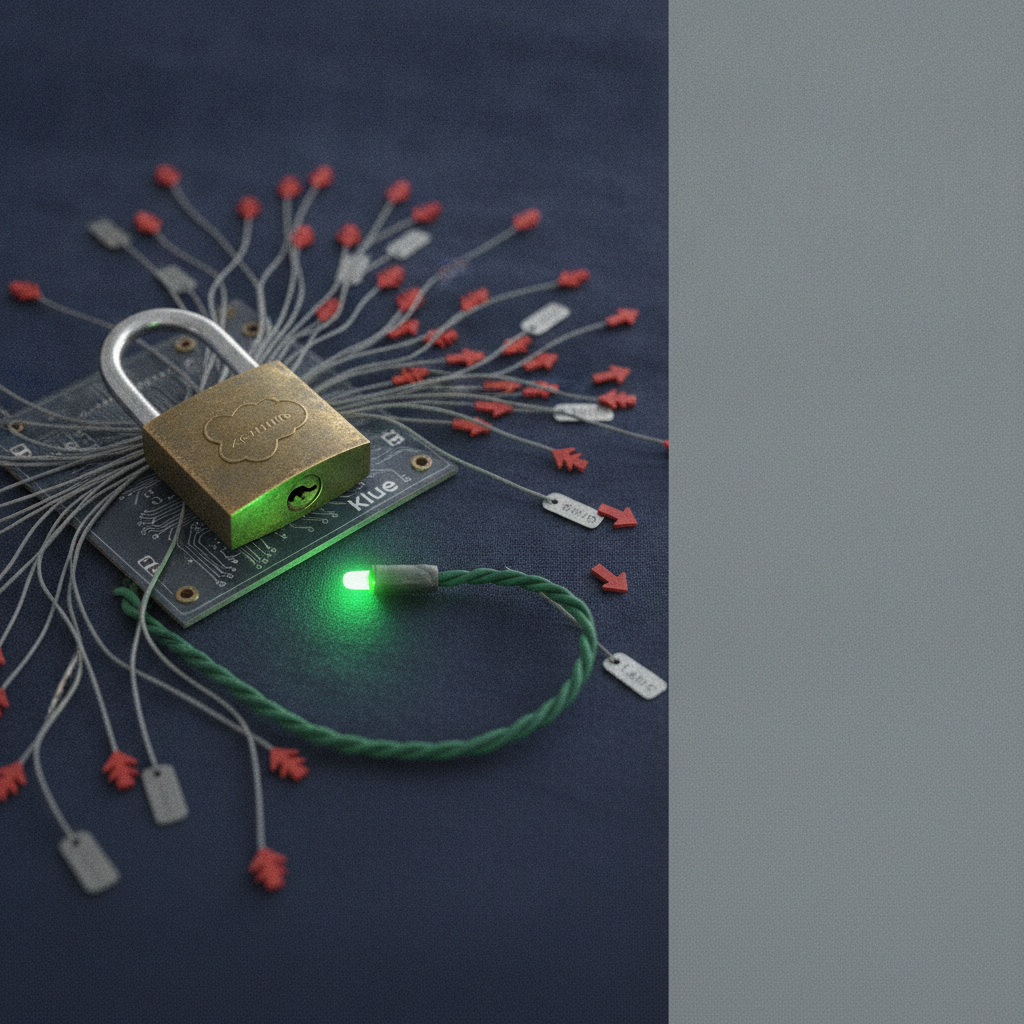
A four-year-old Salesforce credential on Klue cascaded into ~200 simultaneous claims in June 2026 — the canonical aggregation-risk event of the year.
Between 11 June and 24 June 2026, an attacker used a four-year-old Salesforce credential on Klue — a competitive-intelligence SaaS used by enterprise sales teams — to steal OAuth tokens and run mass queries against the connected Salesforce instances of nearly 200 downstream organisations.
The downstream list reads like a who’s-who of the cybersecurity industry itself: Huntress, Recorded Future, Tanium, Jamf, LastPass, and HackerOne were named publicly. The threat actor — self-styled “Icarus” — told reporters they plan to publish sample stolen data from victims that refused to engage.
For the cyber insurance market, this is the canonical aggregation-risk event of 2026. One SaaS vendor’s poor credential hygiene translated into ~200 simultaneous claims across an entire cyber portfolio — and the standard policy structure (per-insured retention, per-event sublimit, silent-cyber extension) wasn’t designed for that.
What Happened
Klue disclosed the incident publicly on 24 June 2026. The timeline, pieced together from incident reports by Huntress, Rescana, and TechCrunch reporting summarised by Obsidian Security:
| Date | Event |
|---|---|
| 11 June 2026 | Attacker uses a four-year-old Salesforce credential on Klue to gain initial access |
| 12 June 2026 | Klue detects the unauthorised activity and begins investigation |
| 12–24 June 2026 | Attacker exfiltrates OAuth tokens for Klue’s Salesforce integration account |
| 24 June 2026 | Klue discloses the incident publicly; threat actor “Icarus” contacts media |
| Late June 2026 | Icarus claims intent to publish sample stolen data from non-paying victims |
The mechanism is worth understanding. Klue had a Salesforce integration — the kind every B2B SaaS company ships by default. The integration used OAuth tokens to authenticate as the Klue service account when querying customer Salesforce instances. The attacker didn’t need to breach Salesforce. They didn’t need to breach Klue’s customer tenants. They authenticated as Klue’s integration account, which is exactly what Salesforce is designed to allow.
From an attacker’s perspective, this is the dream scenario: one credential, hundreds of downstream organisations, every query authenticated and trusted.
From an underwriter’s perspective, the implications are worse.
Why This Matters for Insurance
The standard cyber policy is structured around one insured, one incident, one set of limits. A $5M tower with a $250K retention might look generous until you realise that an event like Klue triggers that tower on ~200 insureds simultaneously — and the same reinsurer treaty sits behind all of them.
The Aggregation Problem
Cyber reinsurance treaties carry aggregation clauses — caps on the reinsurer’s total payout across all insureds for a single event. These clauses exist precisely to handle incidents like Klue. But they were designed for events like the 2017 NotPetya attack, which took weeks to propagate and primarily hit operational technology and supply-chain software.
A SaaS integration breach propagates in minutes. Every insured is hit inside the same 24-hour window. The “event window” for aggregation purposes may not match what the treaty was priced for.
As we noted in our analysis of silent cyber in MFT and file-transfer products, the gap between vendor-breach propagation speed and reinsurance aggregation modelling is the underwriter’s largest unpriced exposure. Klue makes that gap concrete and quantified.
The Sublimit Problem
Most cyber towers today include a third-party / vendor breach sublimit — often a percentage of the total tower, sometimes 10–25%. The Klue event looks like a textbook vendor breach trigger. But for the ~200 insureds downstream of Klue, this is not a vendor breach event — it is a direct event against their own Salesforce tenant.
Whether the policy responds depends on wording. “Vendor breach” sublimits typically cover losses flowing from a breach at a service provider the insured uses — without the insured’s systems being directly compromised. Klue isn’t a vendor the insureds chose to connect to Salesforce via; it’s a vendor one of their vendors chose to connect to. The chain of contracts may not transfer downstream.
Brokers should be reading their clients’ policy wordings this month for two specific clauses:
- “Supply chain breach” or “contingent business interruption” — does it cover a breach at a vendor’s vendor?
- “Privacy liability” — when the threat actor publishes sample data, is the resulting notification cost covered, or does it require “your systems” to have been breached?
The Notification Cascade
When Icarus publishes sample stolen data, every one of the ~200 affected organisations faces potential breach-notification obligations under GDPR, NIS2, HIPAA, US state laws, and Canadian PIPEDA. The notification cost — legal counsel, mailings, credit-monitoring subscriptions, regulator engagement — is rarely capped by a sublimit and can run into seven figures for a large customer database.
For organisations whose Salesforce instance held EU personal data, the 72-hour GDPR notification clock starts on the day they learn of the breach. For healthcare-adjacent insureds (the Klue customer list is heavy with cybersecurity and technology vendors serving healthcare), HIPAA breach notification rules apply. The notification cascade alone could exhaust a mid-market cyber tower.
What Brokers and Underwriters Should Be Asking
Three questions for any renewal going through Q3/Q4 2026:
1. Can your insured inventory every third-party SaaS integration in their Salesforce instance?
Not just the ones they paid for. Klue is the canonical case of an integration that was set up by a vendor and forgotten. Brokers should push insureds to run Salesforce Setup → Installed Packages and document what each integration does, what credentials it holds, and when it was last reviewed.
2. Does the policy’s “vendor breach” coverage reach two levels deep?
Read the wording carefully. Most policies draw the line at “your service providers” — direct vendors. The Klue event demonstrates that the actual exposure chain can run through your vendor’s vendor. Brokers should ask underwriters for explicit two-tier supply chain coverage; underwriters should price it separately rather than excluding it by silence.
3. What is the reinsurer’s aggregation clause for SaaS-vendor incidents?
This is the question that matters most at the treaty level. A single Klue-class event triggers 200 simultaneous tower claims against the same reinsurance treaty. If the treaty has a per-event aggregation cap of, say, $50M and the 200 claims collectively exceed that, every insured gets prorated. The math on Klue-sized events hasn’t historically been priced — it should be.
The Bigger Pattern
Klue is not an isolated event. It joins a pattern of SaaS-vendor credential breaches that produced cascading downstream loss:
| Incident | Year | Mechanism | Downstream scope |
|---|---|---|---|
| SolarWinds (Sunburst) | 2020 | Build-system compromise | ~18,000 organisations |
| Kaseya VSA | 2021 | MSP platform RCE | ~1,500 businesses (via MSPs) |
| Okta support breach | 2022–2023 | Support-system access | Hundreds of Okta tenants |
| Snowflake credential reuse | 2024 | No MFA on service accounts | ~165 organisations including AT&T, Ticketmaster |
| MoveIt (Cleo) | 2024–2025 | MFT zero-day | 2,700+ organisations; 95M individuals |
| Klue / Salesforce | June 2026 | 4-year-old Salesforce credential | ~200 organisations |
The trend is clear: as more of an enterprise’s data lives in SaaS platforms rather than on-premises systems, the integration layer becomes the highest-leverage attack surface. An attacker who compromises a SaaS vendor’s integration account can read or modify customer data across hundreds of organisations without ever breaching those organisations directly.
Underwriting models that price cyber risk as “your perimeter + your employees + your endpoints” are missing this layer entirely. Brokers and underwriters who recognise this shift now — and price it into Q3/Q4 renewals — will be ahead of the curve. Those who wait for the next Klue will be pricing it after the loss.
What Insureds Should Do Now
Three actions for any insured with a non-trivial Salesforce footprint:
- Audit every installed package in Salesforce Setup. Disable and remove anything that isn’t actively used.
- Require OAuth token rotation for every integration, with rotation cadence tied to integration criticality. Klue’s four-year-old credential is the failure mode — long-lived tokens that nobody remembered existed.
- Demand vendor breach-notification SLAs in writing from every integration vendor. “We take security seriously” is not a contract. Notification within 24 hours of a confirmed breach is.
The cleanest insurance program for 2026 is one where the broker can answer all three questions with confidence, the underwriter has priced the integration-layer exposure, and the insured can show documented evidence of both. The Klue event will be a renewal-question conversation for the rest of the year — underwriters and brokers should get ahead of it.
Klue disclosed the incident on 24 June 2026. This post is based on incident reports by Huntress, Rescana, and Obsidian Security. Specific victim names, dates, and mechanisms are drawn from those primary sources. This is not investment, legal, or coverage advice; review the specific policy wording and incident facts with qualified counsel before acting.
Michael Guiao Michael Guiao founded Resiliently AI and writes Resiliently. He has CISM, CCSP, CISA, and DPO certifications — but let them lapse, because in the age of AI, knowledge is cheap. What matters is judgment, and that comes from eight years of hands-on work at Zurich, Sompo, AXA, and PwC.
Go deeper with premium cyber risk reports
Professional-grade analysis, NIS2 compliance guides, and threat intelligence — used by underwriters across Europe.
Best Value
Professional
€490 /month
Full platform — continuous monitoring, API access, white-label reports
Everything in Starter plus professional tools
Upgrade Now → 30-day money-back
Secure via Stripe
Cancel anytime
Free NIS2 Compliance Checklist
Get the free 15-point PDF checklist + NIS2 compliance tips in your inbox.
Check your inbox! Your checklist download is on its way.
Something went wrong. Please try again.
No spam. Unsubscribe anytime. Privacy Policy
blog.featured
AI Tooling RCE: The Sublimit Layer Underwriters Rarely Underwrite
Cyber Insurance ·
9 min read
SolarWinds SAML Bypass: The IT Ticketing Supply-Chain Path
Cyber Insurance ·
9 min read
AM Best and S&P Flag Cyber Pricing Risks: What Underwriters Should Do at Renewal
Cyber Insurance ·
7 min read
One Salesforce Integration Breach Just Hit 200 Cyber Insureds
Cyber Insurance ·
8 min read
Premium Report
2026 Cyber Risk Landscape Report
24 pages of threat analysis, claims data, and underwriting implications for European cyber insurance.
View Reports →Related posts
Agentic AI · · 11 min read
The Five Toxic Powers of Agentic AI — What Underwriters Need to Know
Agentic AI introduces five double-edged powers that create toxic risk combinations. Here's how underwriters, brokers, and CISOs should assess the threat.

Agentic AI · · 9 min read
Agentic Security: What Underwriters Need to Know in 2026
Autonomous AI agents are entering production at scale — and they bring a completely new attack surface that traditional cyber insurance questionnaires weren't designed to capture.

AI Agents · · 7 min read
An AI Agent Deleted a Startup's Production Database — Can You Insure Against That?
PocketOS lost its production database to a Cursor AI agent in 9 seconds. The incident exposes a gap in cyber insurance that most policies don't cover: AI-caused operational destruction with no external attacker.