DORA-ICT-Risikomanagement: Vollständiger Leitfaden 2026

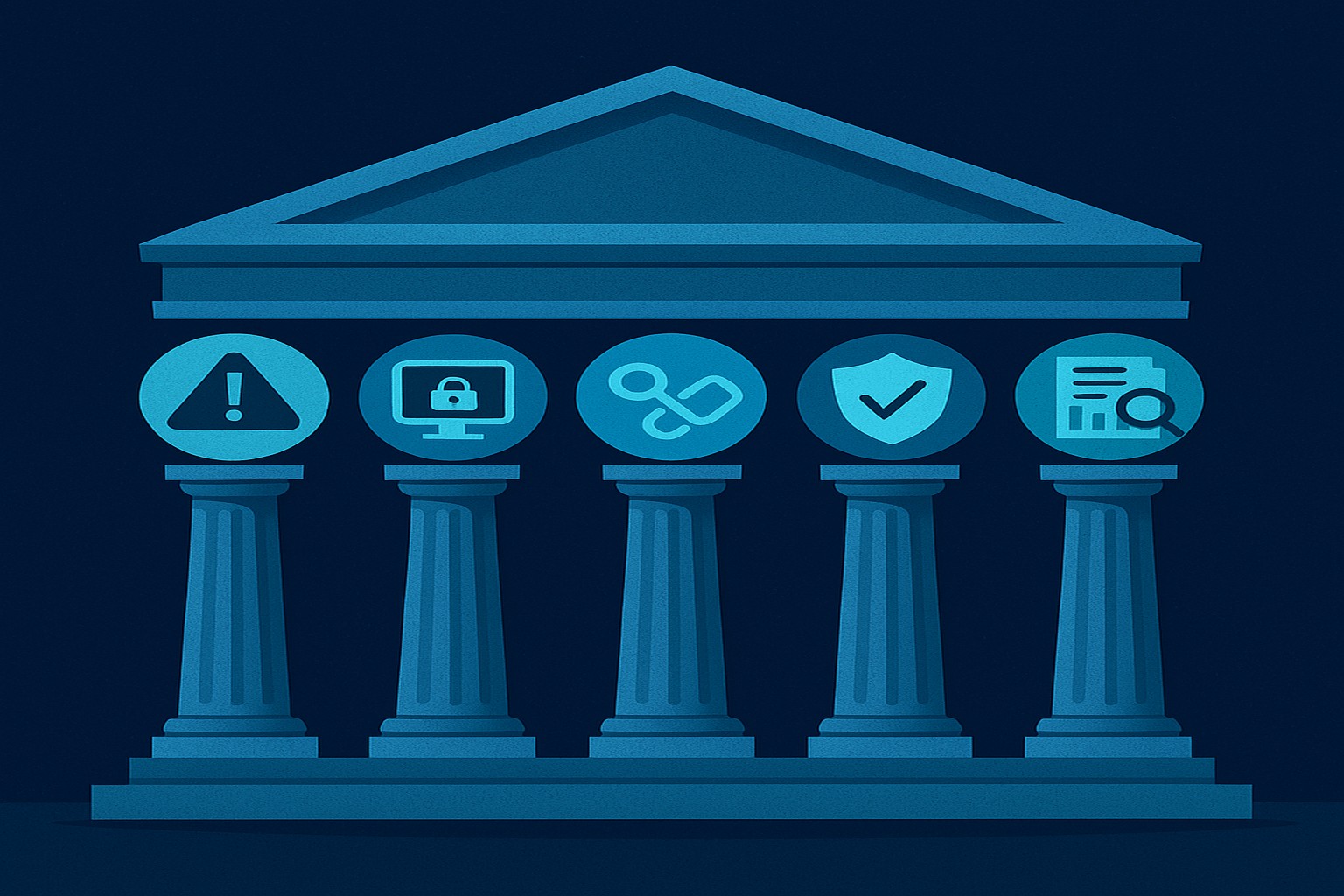
Vollständiger Leitfaden zum DORA-ICT-Risikomanagement-Rahmenwerk — Artikel 5-16, Drittanbieter-Management, Vorfallmeldung und was Finanzinstitute tun müssen.
DORA-ICT-Risikomanagement: Vollständiger Leitfaden 2026.
Zusammenfassung
The Digital Operational Resilience Act — Regulation (EU) 2022/2554 — became applicable on 17 January 2025. More than a year in, the reality is settling in: DORA is not another box-ticking exercise. It is a structural overhaul of how EU financial entities manage ICT risk, report incidents, test resilience, govern third-party dependencies, and share threat intelligence.
For cyber insurance underwriters and risk engineers, DORA changes the baseline. A financial institution that cannot articulate its DORA compliance posture is, by definition, an incomplete risk assessment. This guide walks through the regulation’s five pillars, its interaction with NIS2, enforcement mechanics, and the specific questions underwriters should be asking insureds in 2026.
Kernpunkte
- NIS2-Compliance ist 2026 keine Option — sie ist Pflicht
- Die Strafen sind erheblich: bis zu 10 Mio. Euro oder 2% des weltweiten Umsatzes
- Persönliche Haftung für Leitungsorgane ist Realität
- Cyber-Versicherung und NIS2-Compliance ergänzen sich
Praktische Schritte
- Klassifizierung klären — Wesentlich oder wichtig?
- Gap-Analyse durchführen — Aktuelle Maßnahmen vs. Artikel 21
- Maßnahmen priorisieren — Höchste Wirkung zuerst
- Dokumentieren — Vollständiges Nachweispaket erstellen
- Versicherung prüfen — NIS2-Compliance aktiv kommunizieren
Nützliche Tools
- NIS2-Checker — Kostenlose Bereitstellungsprüfung
- NIS2-Checkliste PDF — 15-Punkte-Download
- FAIR-Risikorechner — Finanzielle Risikoquantifizierung
- Cyber-Risikorechner — Versicherungsspezifische Risikobewertung
Verwandte Leitfäden:
Michael Guiao Michael Guiao gründete Resiliently AI und schreibt Resiliently. Er hat CISM, CCSP, CISA und DPO-Zertifizierungen — aber sie verfallen lassen, denn im Zeitalter von KI ist Wissen billig. Worauf es ankommt, ist Urteilskraft — und die kommt aus acht Jahren Praxis bei Zurich, Sompo, AXA und PwC.
Get the full picture with premium access
In-depth reports, assessment tools, and weekly risk intelligence for cyber professionals.
Best Value
Professional
€490 /month
Full platform — continuous monitoring, API access, white-label reports
Everything in Starter plus professional tools
Upgrade Now → 30-day money-back
Secure via Stripe
Cancel anytime
Free NIS2 Compliance Checklist
Get the free 15-point PDF checklist + NIS2 compliance tips in your inbox.
Check your inbox! Your checklist download is on its way.
Something went wrong. Please try again.
No spam. Unsubscribe anytime. Privacy Policy
blog.featured
AI Tooling RCE: The Sublimit Layer Underwriters Rarely Underwrite
Cyber Insurance ·
9 min read
SolarWinds SAML Bypass: The IT Ticketing Supply-Chain Path
Cyber Insurance ·
9 min read
AM Best and S&P Flag Cyber Pricing Risks: What Underwriters Should Do at Renewal
Cyber Insurance ·
7 min read
One Salesforce Integration Breach Just Hit 200 Cyber Insureds
Cyber Insurance ·
8 min read
Premium Report
2026 Cyber Risk Landscape Report
24 pages of threat analysis, claims data, and underwriting implications for European cyber insurance.
View Reports →